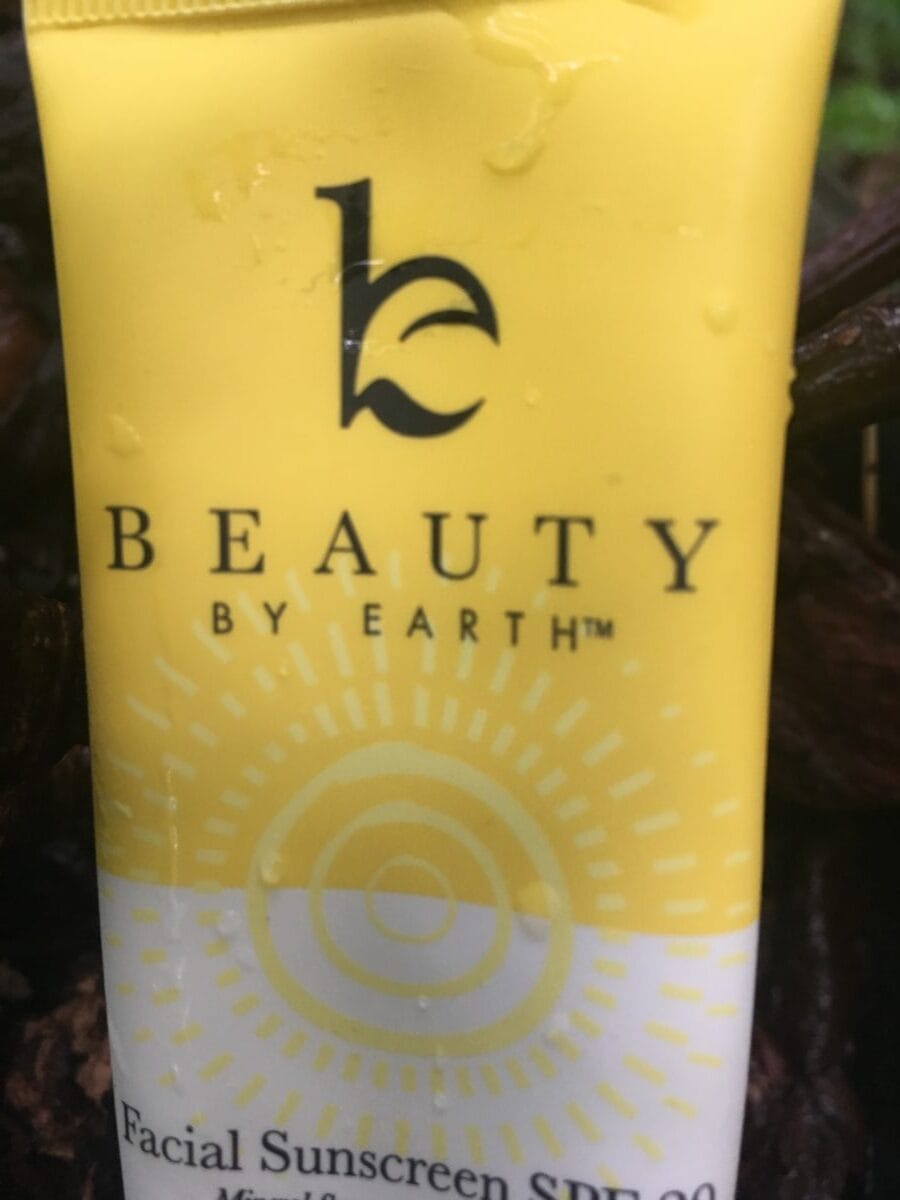
Overview
An excellent sunscreen – I use it on occasion when I’m outside in the summer during the day. It feels a little thick and oily at first, but it absorbs quickly. I haven’t tried it while playing sports (other than biking a little bit) because I usually play sports in the late afternoon/early evening.
From researching on Amazon, Beauty by Earth’s seems to be among the best in terms of ingredients and ratings.
I’m happy with it and would recommend it to friends.
- SPF 20,
- Reef Safe
- Water resistant up to 80 minutes
- Biodegradable – most of the ingredients are organic plant-based oils
- Uses the best possible substance currently widely-accepted – non-nano zinc oxide
- Remember, it’s most likely healthy to get sun in moderation.
- You can still get sun on your body and produce Vitamin D, so you might as well protect your face.
A hat and good sunglasses work great, also consider sunscreen on occasion depending on your lifestyle. This is up to your judgement, though. I usually try to stay inside during the middle of the day, or I’ll wear a hat. Next time I go to the beach, I’ll definitely bring sunscreen.
It is on the expensive side, though like I said I would personally wear hat and sunglasses first, and then sunscreen when needed. (But I’m not a medical professional, please consult with a qualified professional about your specific skin needs)
Pros and Cons
Pros
- The ingredient list looks very good – lots of high-quality plant-based oils with antioxidant properties. EWG ranks all 1, the best rating except for castor oil, which gets a 2, still not bad.
- Uses non-nano zinc oxide, which seems to provide fairly broad spectrum protection against UVA and UVB. Non-nano appears to be the current favorite physical blocker for overall best performance in the sunscreen arena. It’s only drawback is that it can be a bit chalky.
- Fairly well-reviewed.
- I like it.
- Between the high-quality non-active ingredients and the zinc oxide, this sunscreen is said to be biodegradable and reef-safe
- There’s a tinted version, as well (https://www.amazon.com/Tinted-Facial-Sunscreen-Protection-Foundation/dp/B01N81AV6S)
Cons
Can be Chalky
Depending on one’s skin tone, according to some Amazon reviewers, this sunscreen (b/c of zinc oxide) may create a chalky effect on one’s skin. (Check out the https://www.amazon.com/Tinted-Facial-Sunscreen-Protection-Foundation/dp/B01N81AV6S) My skintone is fairly light, so it’s only chalky for about 30-60 seconds.
While there are chemical-based sunscreens that don’t create the same effect (for example here), there are some mineral-based (zinc oxide and/or titanium dioxide) sunscreens that may work better, regarding visual appearance. Usually, these mineral-based sunscreens will be tinted so that the color of the sunscreen will be closer to a person’s skin tone.
This is the only sunscreen I’ve tried, so I can’t comment on first-hand experience. But it appears there are some possibilities.
It’s also important to remember that vitamin D is most-certainly essential for one’s health, but it’s also crucial to understand that skin cancer may affect people with different skin tones. There are definitely different aspects to skin cancer.
Depending on your sense of humor, this BuzzFeed article sums up certain aspects of the situation. It also appears that there may be an increased risk of skin cancer (SCC) that may not be so related to “harmful effects of the sun”, at least relative to other statistics.
For example, Bob Marley (R.I.P.), contracted a type of skin cancer that may have been from causes other than overexposure to the sun. Please also check out this comment for more food for thought. (Please understand I’m not a healthcare professional)
Fake Reviews (Not Now)
There may have been a few fake reviews on Amazon, possibly when this product was first launched. Amazon seems to have worked those out, and now the reviews seem legit – everyone is at least a verified buyer.
Some Negative Reviews
One amazing website, Kitchen Stewardship, tried a whole bunch of mineral-based sunscreens. The fmaily tried out all the sunscreens. She said that her daughter may have had developed a rash the next day after using the sunscreen– though it may or may not be correlated. The two products recommended most? The Badger Balm family of sunscreens and Raw Elements Eco Formula Lotion and Eco Stick. She also says Adorable Baby may be the best option for folk with darker skin tones who want to use a mineral-based sunscreen.
Personal Experience
After many years of wearing hats but no sunscreen, I realized I might want a good facial sunscreen. Looking around for a few hours on Amazon (and considering making my own), I decided on Beauty by Earth’s Facial Sunscreen SPF 20. Here’s my review.
I would recommend it to friends and family. I’m not a medical professional, though, so please understand this review is for informational purposes only (and just represents an opinion). Please consult with a qualified professional about your specific situation.
For the record, I usually wear a hat and avoid the midday sun, and I use facial moisturizers 1-2x a day. That being said, I recently realized I could just get my daily sun from contact with other parts of my body while protecting my face. I also realized that I could wear good sunglasses, my eyes would be protected, and the rest of my body would sense the level of sunlight present.
So, I decided it was time to get some good sunscreen.
A few years ago, the market didn’t supply sunscreen with organic ingredients and micro, non-nano zinc oxide. Or, at least, I didn’t know about it or where to find it. (The mineral sunscreen used to be more like white paint applied to the face)
After further honing my consumer-product research skills, I decided upon Beauty by Earth’s sunscreen. I’m not a long-time or big user, but I’m so far pleased with the product.
While I haven’t personally tried many other brands, Badger Balm seems to make sunscreens of a similar quality. There are undoubtedly other manufacturers as well, I just got the first one met my search criteria – mostly organic and non-nano zinc oxide.
Don’t Just Rely on Sunscreen
Of course, you shouldn’t rely on just a sunscreen for your skin health. Also consider a good diet, with lots of leafy green veggies, and maybe tomatoes and green tea. Everyone suggests a good hat and good sunglasses.
After being in the sun, consider not washing your skin for a bit – supposedly the vitamin D your skin created needs time to be absorbed by your skin. I think it’s probably okay if you do moisturize your skin right away (especially with lotions containing antioxidants) but I’m totally guessing the vitamin D would still be absorbed into the skin.
More Details
Specs
Weight 3.5 oz
Dimensions 4.75 x 1.5 x 1.5 in
From the Manufacturer’s Website
- Designed to be used every day
- Most of the ingredients are USDA organic, though the sunscreen isn’t certified 100% organic
- Contains moisturizing properties like coconut oil
- Marine and reef safe, and safe for all ages
- “We’ve formulated our non-nano mineral sunscreen to give your complexion a high-level of sun protection without exposing you to dangerous, toxic, or sketchy chemicals,” according to the Beauty by Earth
- Free of parabens, phthalates, and nanoparticles
- 1 year, 100% Customer Satisfaction Guarantee with a no-questions-asked refund
Recommended Application
In the morning to the face, neck and exposed upper chest. Allow 60-90 seconds for the white lotion to ‘absorb’. Reapply when needed. Reapply after intense sweating, swimming and toweling off.
Recommended Usage
For normal, day-to-day activities.
What do the Ingredients Do?
Basically, there are a few types of ingredients in this sunscreen.
The zinc oxide protects the skin from UVA/UVB light. The Rosemary Leaf Extract and Vitamin C, both potent antioxidants, most likely help both the skin and lotion. In the case of the lotion, the antioxidants slow the degradation of the oils. Most of the oils add viscosity and help to take care of the skin. The Glyceryl Stearate and the Magnesium Sulfate help keep all the ingredients mixed together. The essential oils provide good smell and probably antioxidant properties, among other functions.
Ingredients
 Organic Aloe Barbadensis (Aloe Vera) Leaf Juice, Organic Cocos Nucifera (Coconut) Oil, Sorbitan Sesquioleate, Vegetable Glycerin, Glyceryl Stearate SE, Organic Helianthus Annuus (Sunflower) Oil, Organic Simmondsia Chinensis (Jojoba) Seed Oil, Ricinus Communis (Castor) Seed Oil, Organic Rosmarinus Officinalis Leaf Extract, Magnesium Sulfate, Ascorbyl Glucoside (Vitamin C), Xanthan Gum, Organic Argania Spinosa Kernel (Argan) Oil, Organic Cucumis Sativus (Cucumber) Fruit Extract, Organic Ginkgo Biloba Extract, Radish Root Ferment Filtrate, Cupressus Sempervirens (Cypress) Leaf Essential Oil, Citrus Paradisi (Pink Grapefruit) Essential Oil, Zinc Oxide (Non-nano)
| Ingredient | Info/Usage (from Cosmetics Info & EWG) |
| Organic Aloe Barbadensis (Aloe Vera) Leaf Juice | Probably used to thin out the mixture. Also, believed to have anti-inflammatory and soothing properties. |
| Organic Cocos Nucifera (Coconut) Oil | A great natural oil. Most likely helps with skin moisturization and conditioning. |
| Vegetable Glycerin | A (in this case naturally-derived) sugar alcohol. Prevents the lotion from drying and also is a skin conditioner |
| Glyceryl Stearate SE | This an emulsifier – it helps to mix the ingredients together. It can also help the cream be applied smoothly and protects the skin from dehydration. |
| Organic Helianthus Annuus (Sunflower) Oil | Helps to soften and condition the skin, among other properties |
| Organic Simmondsia Chinensis (Jojoba) Seed Oil | Helps to soften and condition the skin, among other properties |
| Ricinus Communis (Castor) Seed Oil | Helps to soften and condition the skin, among other properties. May have some issues, according to EWG. |
| Organic Rosmarinus Officinalis (Rosemary) Leaf Extract | Can help with facial toning, and anti-irritative properties. A strong anti-oxidant, it can prolong the shelf-life of plant-based oils. |
| Magnesium Sulfate | Another potential emulsifier, also may have skin conditioning properties. Can help add body to the lotion, maybe? |
| Ascorbyl Glucoside (Vitamin C) | Vitamin C is a strong antioxidant. |
| Xanthan Gum | Helps with the overall feel of the lotion. |
| Organic Argania Spinosa Kernel (Argan) Oil | An amazing skin conditioner and antioxidant |
| Organic Cucumis Sativus (Cucumber) Fruit Extract | Anti-Inflammatory, antioxidant, helps repair and condition skin. |
| Organic Ginkgo Biloba Extract | Skin conditioning and possibly anti-aging |
| Radish Root Ferment Filtrate | Antimicrobial |
| Cupressus Sempervirens (Cypress) Leaf Essential Oil | For fragrance, plus many other potential properties |
| Citrus Paradisi (Pink Grapefruit) Essential Oil | For aroma, plus many other potential properties |
| Zinc Oxide (Non-nano) | Zinc oxide blocks a broad spectrum of UVA and UVB light from reaching the skin. |
Conclusion
 Tons of great skin products exist in today’s market. Beauty by Earth’s Facial Sunscreen SPF 20 (in my opinion) sits at a high-level within the sunscreen market. The organic ingredients and non-nano zinc oxide should provide about the highest level of sun lotion protection available.
Of course, make sure you practice common sense with sun over- and under-exposure. If you’re concerned about protecting your face, please consider wearing a hat and proper sunglasses, too. And try to ration your time in the summertime, midday sun, if necessary.
Beauty by Earth also produces a body sunscreen, but I haven’t tried that. If I do, I’ll let you know. But it may be worth checking out as well. Another great product line seems to be Badger Balm, though there are tons of companies right now producing great products!
If you have any questions, comments, or suggestions, please leave a comment below. And feel free to contact me via the messages on Twitter, Facebook and/or the website’s message system.
Best wishes!
Other Recommended Sunscreens

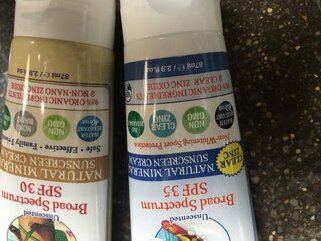
I’ve only really tried Badger Balm and Beauty by Earth. But I stopped by Whole Foods (and took pictures), and I found 2 other brands that also seemed quite good – Kiss My Face and Goddess Garden. They all include organic ingredients and use non-nano zinc oxide.

More info
- Facts about Skin Cancer (PDF)
- Molecular evidence that oral supplementation with lycopene or lutein protects human skin against ultraviolet radiation: results from a double‐blinded, placebo‐controlled, crossover study
- Skin care industry talks about formulating a mineral-based sunscreen
- Skin photoprotection by green tea: antioxidant and immunomodulatory effects
- All about lutein (found in leafy green veggies)
- Effect of particle size on the UV absorbance of zinc oxide nanoparticles
- Human safety review of “nano” titanium dioxide and zinc oxide
- Charts of the light spectrum (UVA/UVB/visible):
- Chart showing absorption rates for Zinc Oxide and Titanium Oxide
- Titanium dioxide and zinc oxide nanoparticles in sunscreens: focus on their safety and effectiveness
- Understanding SPF at Wikipedia
- The importance of Vitamin D
- Chart showing relationship between the size of Zinc Oxide particles and their absorption spectrums of UV light